
Places, creatures and stories that make Ranthambore worth returning to.
Ask anyone what comes to mind when they hear the word Ranthambore, and the answer arrives almost before the question finishes. Tiger.
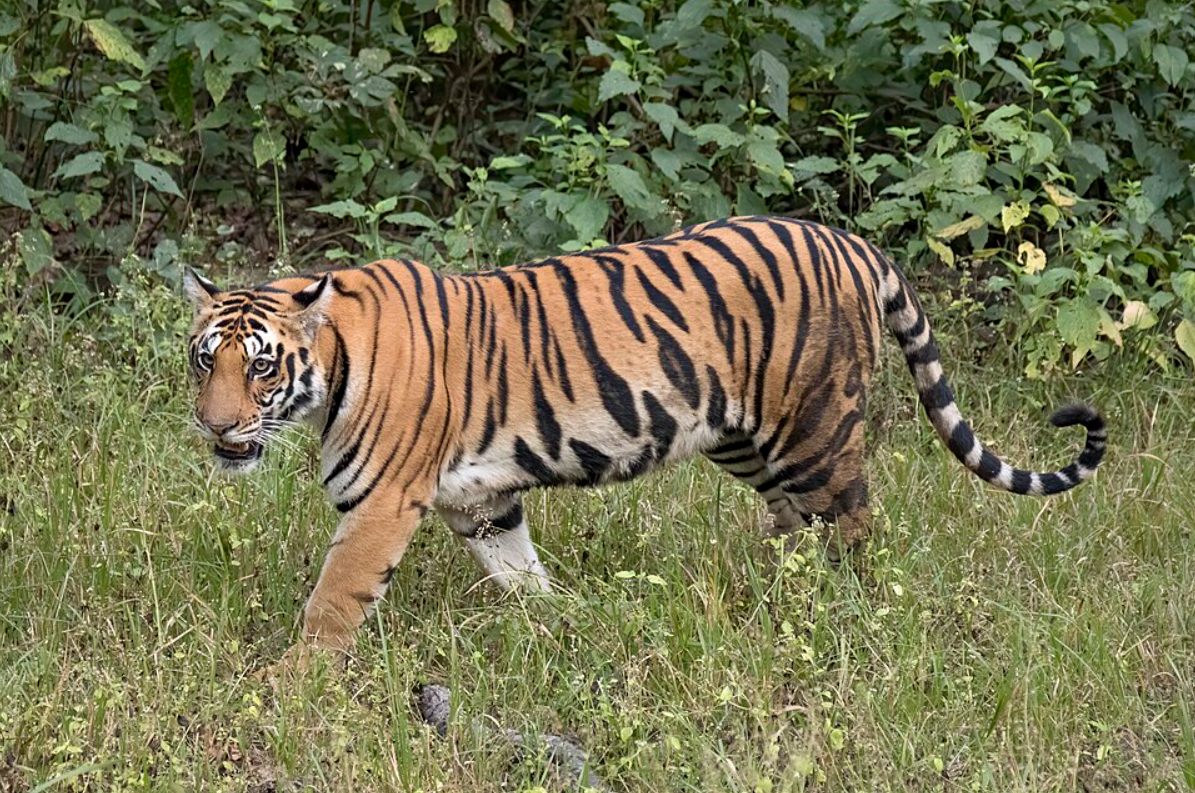
It is not an unreasonable association. Ranthambore was among the nine reserves brought under Project Tiger when the programme began in 1973, and more than five decades later it remains one of the most reliable places in the world to see a wild tiger in daylight, at close range, without the aid of a hide or a long lens. That reputation was earned honestly, over decades, and it is the reason most visitors book the trip in the first place.
But there is a quiet irony sitting underneath that fame.
The tiger made Ranthambore a household name. The forest is the larger story.
The tiger made Ranthambore a household name. The tiger has also, gradually, made it easy for visitors to overlook almost everything else the reserve is actually built on.
A tiger does not exist as an isolated fact of nature. It exists because a very specific set of conditions exists around it — enough prey to sustain it, enough water to support that prey, enough cover to hunt from, enough territory to defend, and a landscape large and intact enough to hold all of that together without collapsing.
A tiger sighting, in other words, is not really evidence of one animal. It is evidence of an entire system working.
The reserve's herbivore base of chital, sambar and nilgai, its populations of langur and macaque moving through canopy and open ground, its wild boar, its extensive resident and migratory birdlife, and its parallel community of predators and scavengers — leopard, sloth bear, hyena, jackal, fox — are not a supporting cast assembled for the tiger's benefit.
They are the actual substance of the place. The tiger is simply the most visible character in a much longer story.
The forest is more than its most famous animal.
That visibility has a way of flattening everything else into background.
Spend an hour watching a herd of chital and their behaviour starts to read less like scenery and more like a running conversation — feeding, moving, stopping, staring, reacting, feeding again.
Sambar do the same.
Langurs, perched high enough to see danger before anything on the ground can, often do it first.
An alarm call in Ranthambore rarely stays isolated. It moves.
A langur notices something and calls. A group of chital nearby breaks from feeding and turns toward the same direction. The safari vehicle, if the guide is paying attention, turns that way too.
Sometimes what caused it steps out into view. Sometimes it never does.
But even without the reveal, what has actually been witnessed is a functioning early-warning system that predator and prey have been running against each other for longer than the concept of a safari has existed.
Which is, on its own terms, more interesting than a tiger simply walking across a road in full view.
The tiger is simply the most visible character in a much longer story.
Then there are the animals that were never part of anyone's itinerary to begin with.
Sloth bears move through the same landscape as the tigers, largely unphotographed, because they are harder to predict and rarely the reason anyone booked the trip.
Leopards occupy terrain that overlaps with tiger range but keep to cover the tiger doesn't need to bother with, which makes them, if anything, harder to see well.
Hyenas carry a reputation shaped almost entirely by their scavenging habits, despite performing an ecological function every bit as necessary as a predator's.
Crocodiles hold still at the waterline for hours at a time, doing nothing that reads as dramatic until the moment it suddenly is.
None of these animals will ever be the face of Ranthambore's marketing. That has no bearing on how important they are to the place actually functioning as an ecosystem rather than a stage set.
One tiger can tell you about an entire ecosystem.
There is a reason the tiger, specifically, became the symbol conservation organised itself around, and it is worth understanding rather than assuming.
The National Tiger Conservation Authority describes the tiger as an umbrella species — the idea being that protecting a viable population of tigers necessarily requires protecting the prey base, the habitat, and the ecological processes that sustain all of it.
A single, charismatic animal becomes the practical justification for defending an entire system that would be much harder to rally protection for on its own terms.
This is worth sitting with for a moment, because it reframes what a tiger sighting actually represents.
A visitor typically arrives wanting one photograph. What conservation has actually had to protect, in order for that photograph to remain possible at all, is everything else — the forest, the water, the prey, the corridors connecting one part of the landscape to another, and the communities who live alongside all of it.
The tiger is the entry point.
It was never meant to be the whole subject.
Look again. There is more to see.
The next time someone in the vehicle says, quietly and urgently, there — tiger, the instinct to look is the right one.
Of course it is.
But once the initial excitement has settled, a second look is worth taking.
What are the deer doing now that the tiger has appeared? Where did the langurs go? What happened to the birds that were audible a minute ago? What does the water look like from here?
The tiger is, without question, extraordinary.
But Ranthambore was already extraordinary before that particular animal walked into view, and it will remain exactly as extraordinary after it disappears back into the trees.
The forest does not depend on being watched to keep functioning.
It was doing this long before anyone arrived to notice, and it will keep doing it after everyone has left.